The Capital File / AI & public markets
AI’s IPO Rush Meets Uneasy Investors
Investors are weighing AI’s growth against the cost of building it—and the wait for returns.
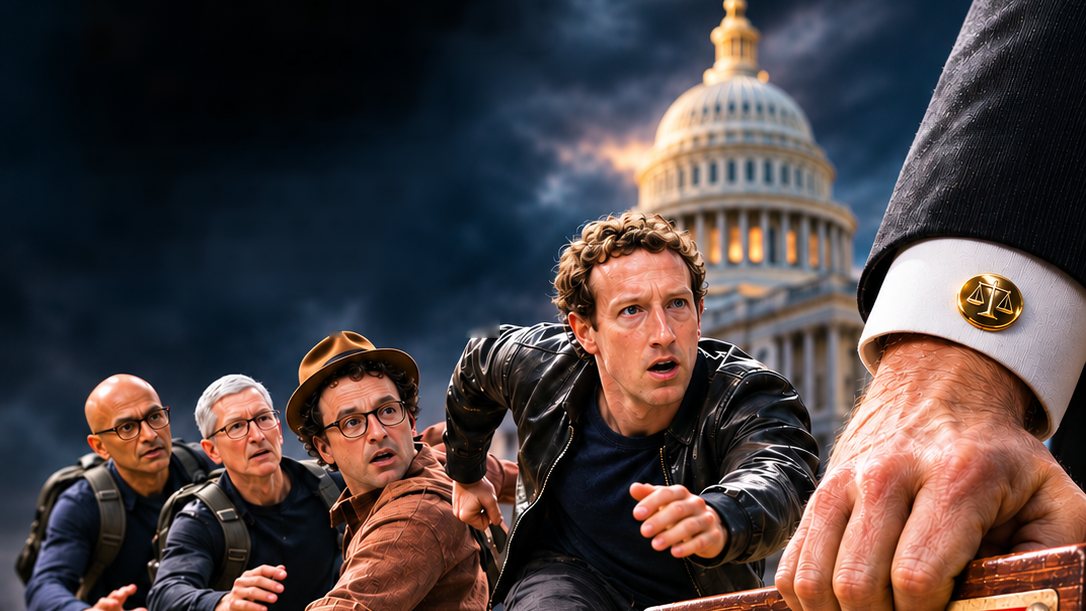
AI’s growth is drawing a harder question from investors: how much cash will the buildout consume before the returns arrive?
Google Cloud more than doubled. AWS grew 39 percent. Azure grew 48 percent. The usage is real. Free cash flow is not. Alphabet reported $9.1 billion in negative free cash flow in the third quarter — its second straight quarter in the red — and covered the gap with $28.7 billion in new debt and $12.4 billion in stock sales. Shares fell about 11 percent the next day. Amazon spent $77.3 billion on property and equipment in the quarter, more than double the year-earlier figure. Its free cash flow over the trailing 12 months is negative $42.4 billion. The stock dropped after the report.
Microsoft went the other way. It generated $18.6 billion in free cash flow, funded its buildout from operations, and its shares rose about 2 percent.
That split is the story. Investors are not turning on artificial intelligence. They are turning on companies that must borrow to build it. The Nasdaq finished the week down 2 percent.
Anthropic’s Test
The timing is awkward for Anthropic, which filed on Oct. 26 to list on Nasdaq under the ticker ANT. Reports put a possible debut this month at a valuation of $1.5 trillion to $2 trillion. The company has not set a price range and the SEC review is ongoing.
The numbers answer last week’s question better than most. Revenue reached $16.3 billion in the first half of 2026, up nearly 1,300 percent from $1.2 billion a year earlier. The second quarter alone produced $11.6 billion in revenue and the company’s first operating profit. The $80.7 billion net loss in the filing is largely a non-cash charge — about $72 billion of it tied to the rising value of convertible notes.
Nearly half of Anthropic’s revenue still runs through the cloud platforms of Amazon, Google and Microsoft, the same companies whose spending rattled investors last week. Buying the stock means buying into that buildout.
OpenAI has already stepped aside. The company filed confidentially in June after a March funding round valued it at $852 billion. In September, CEO Sam Altman told Fortune that “right now would be an ill-advised moment to go public” and ruled out a 2026 listing. It is raising private capital instead.
Anthropic is the first real public test. A strong debut reopens the window for the rest of the late-stage AI companies. A delayed or marked-down deal tells them to wait.
Where the Pressure Lands
The cash squeeze does not stay on Wall Street. It moves downstream to the companies buying AI — including the newsrooms, studios and marketing teams that spent two years treating the technology as cheap leverage.
Budgets get audited. When the sellers of AI are forced to prove a return, CFOs ask buyers to do the same. Procurement will demand usage numbers on existing seats before approving new video, localization or versioning tools. Teams that can show hours saved or output gained keep their budgets. Open-ended pilots do not.
The cost path may stop falling. Most content budgets assume AI gets cheaper every year. That assumption collides with a large capital bill that has to be repaid. Amazon has guided about $220 billion in capital spending this year and signaled it will spend “meaningfully more” in 2027. Alphabet has guided $195–205 billion. Meta is in the $135–145 billion range. If investors keep rewarding cash over growth, the path of least resistance is higher prices, not lower ones. Video generation and high-volume localization tools are already seeing early pressure.
Rollouts slow. Software makers that miss numbers have reason to hold back features that are expensive to run at scale. Buyers under margin pressure stretch copilot and automation projects across more quarters. The tools still work. Cash is simply easier to defend in a budget meeting than a multi-year transformation plan.
At the same time, low-quality AI-generated content is flooding ad inventory. One tracking firm recorded a 354 percent jump this year in ad requests tied to AI-slop pages, adding pressure on legitimate publishers and creators while the cost of high-quality tools stops declining as quickly as expected.
What to Watch
The economy is not the immediate problem. It grew at a 3.4 percent annual rate in the third quarter, the fastest pace in a year. Borrowing costs are. The Federal Reserve held rates at 3.75–4 percent last week, but two policymakers voted to raise them. For companies financing data centers with debt, a December hike raises the bill.
- Monday
- Apple and Palantir report after the close. Palantir is an early read on whether large companies are still expanding AI contracts.
- Tuesday
- Midterm elections. A Democratic takeover of Congress could bring more scrutiny of data centers and AI. AMD reports after the close.
- Wednesday
- ISM services index. Datadog, Arm, Qualcomm, HubSpot and Figma report.
- Thursday
- Cloudflare and Atlassian report.
- Friday
- October jobs report. Economists expect a modest gain after September’s 29,000. A strong wage number would strengthen the case for a rate hike.
What Could Reassure Investors
Cash, not just growth. AI revenue that covers the cost of the data centers behind it — the way Microsoft showed last week.
Margin guidance that expands in the holiday quarter would show pricing power and buy time for heavy spending.
Paid seats instead of pilots. Signs in this week’s software reports that customers are signing larger, longer commitments rather than testing.
For two years the question on Wall Street was whether AI would work. Last week investors moved to a harder one: who pays for it, and how long until they get their money back.
Anthropic’s IPO is the first public test of that question. The content economy is already living with the answer.
Bel Bruno was the AP’s senior correspondent covering the 2008 financial crisis and a former business editor of the Los Angeles Times. Reach him at [email protected].
Capital, from the Dispatch Media Network. Back to the edition